Big Walk Solo & Player Count — Can You Play Alone? (2–12 Players)
Published 2026-09-214 min read
Big Walk has no single-player mode — it needs at least two players, and supports up to 12. How player count works, the 2/3/4+ world choice, and what solo play actually looks like.
The straight answers first, straight from the developer's FAQ: Big Walk has no single-player mode. It is a cooperative game for 2 to 12 players, and everything in it is designed around talking to each other. You can start a world alone and poke around — but as House House puts it, "you won't get very far."
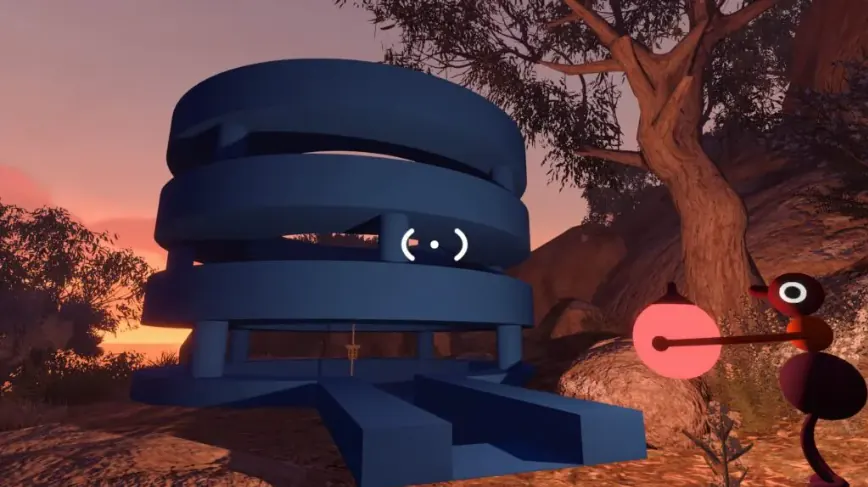
Why solo does not work
Big Walk's puzzles are co-op objects, not solo challenges with an AI companion: boost each other up ledges, hold mechanisms from two sides, relay items across gaps that one person cannot cross alone. The design leans so hard on communication that the official FAQ forbids-by-design the outside-voice-chat workaround — the whole point is coordinating in-game. Wandering solo is possible for sightseeing and light exploration, but progress stalls the moment a puzzle needs a second pair of hands.
If you do not have a group yet, do not bounce off the game — see our find players guide for where open groups gather.
The player count range: 2 to 12
| Players | What it feels like |
|---|---|
| 2 | The most focused co-op experience — tight communication, clear roles |
| 3–4 | The sweet spot most groups settle into |
| 5–11 | Room for specialists — scouts, collectors, chaos agents |
| 12 | The official description: "a fun, chaotic mess" — in a good way |
House House's own guidance is that any number in the range is good — the game was not tuned for one magic count. Fewer players means every voice matters more; a dozen means organised chaos, with somebody always falling off something.
The 2 / 3 / 4+ world choice, explained
Here is the detail most new groups miss: when the host starts a session, they pick a 2-player, 3-player or 4+ player version of the world. Some puzzles and setups adapt to that choice. Two FAQ nuances that matter in practice:
- Think of it as the minimum number of players who will show up, not the maximum. Twelve friends can still pile into a "3 player" world.
- If your roster has known part-timers — the friend who vanishes after an hour — pick the lower tier. A 2-player-tuned puzzle with three people is solvable; a 4+ puzzle with two is the classic reason groups hit a wall and blame the route.
Changing your mind later is cheap: the choice happens per session at host-time, so the next session can use a different setting. The host's other session tools (passwords, Join Codes, moderation) are covered in the saves and hosting guide.
One set of coordination tricks worth stealing
The player-count flexibility creates some fun logistics, and the community's favourite is already semi-official: characters can pick up and carry each other — it is listed among the game's accessibility features, and it doubles as the answer to "how do we get someone up this ledge". Splitting key items between players (one walkie-talkie each, rather than both in one backpack) is the other habit that separates smooth groups from shouting ones — more of those in our beginner tips.
Bottom line
- Solo: not supported — wander yes, progress no.
- Minimum: 2 players (pick the 2-player world when the host starts).
- Maximum: 12 players, no subscription needed on PC, and full crossplay across PC, Mac, PS5 and Switch 2.
- No group yet? Find players, then start with the beginner guide.